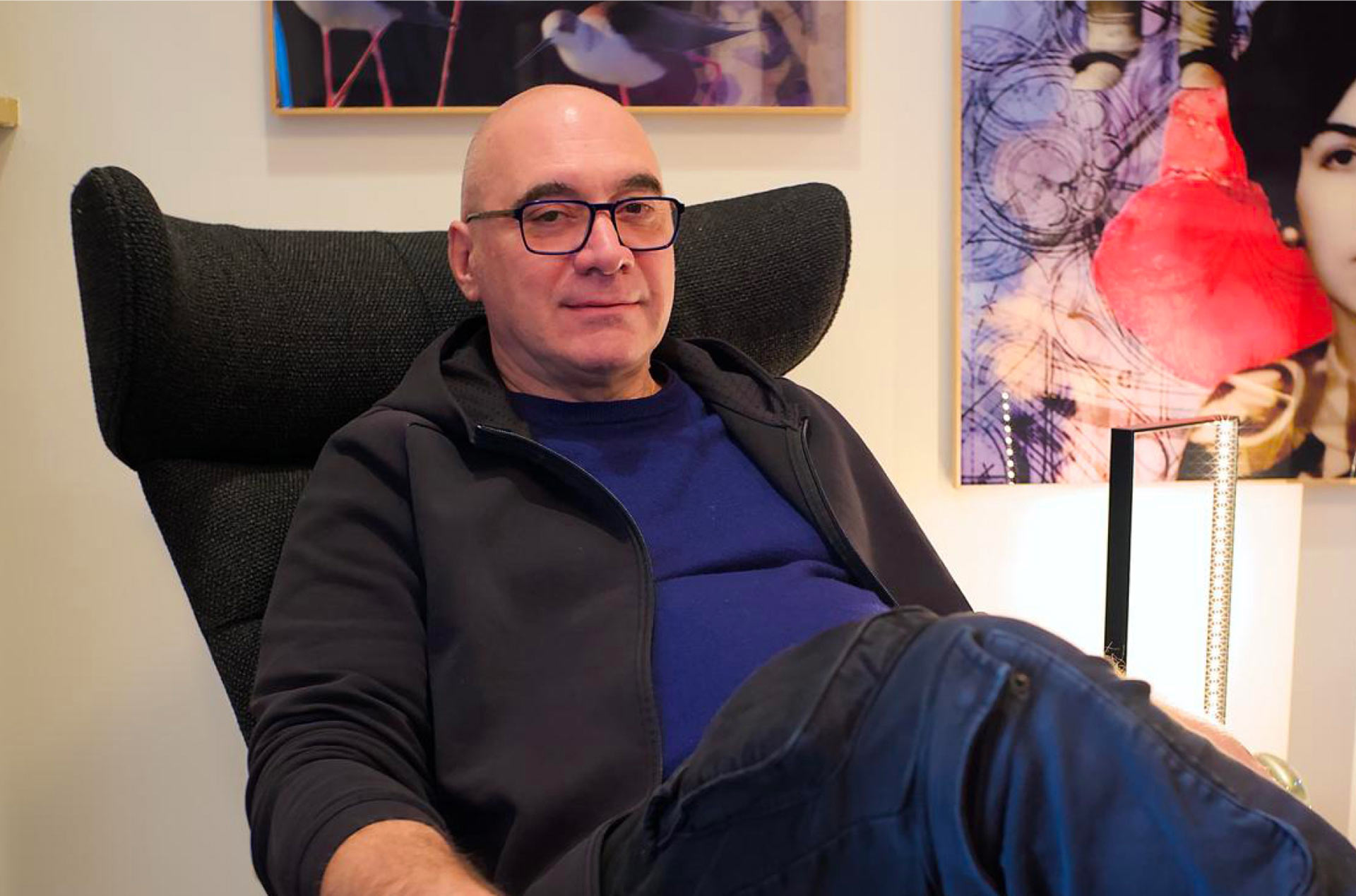
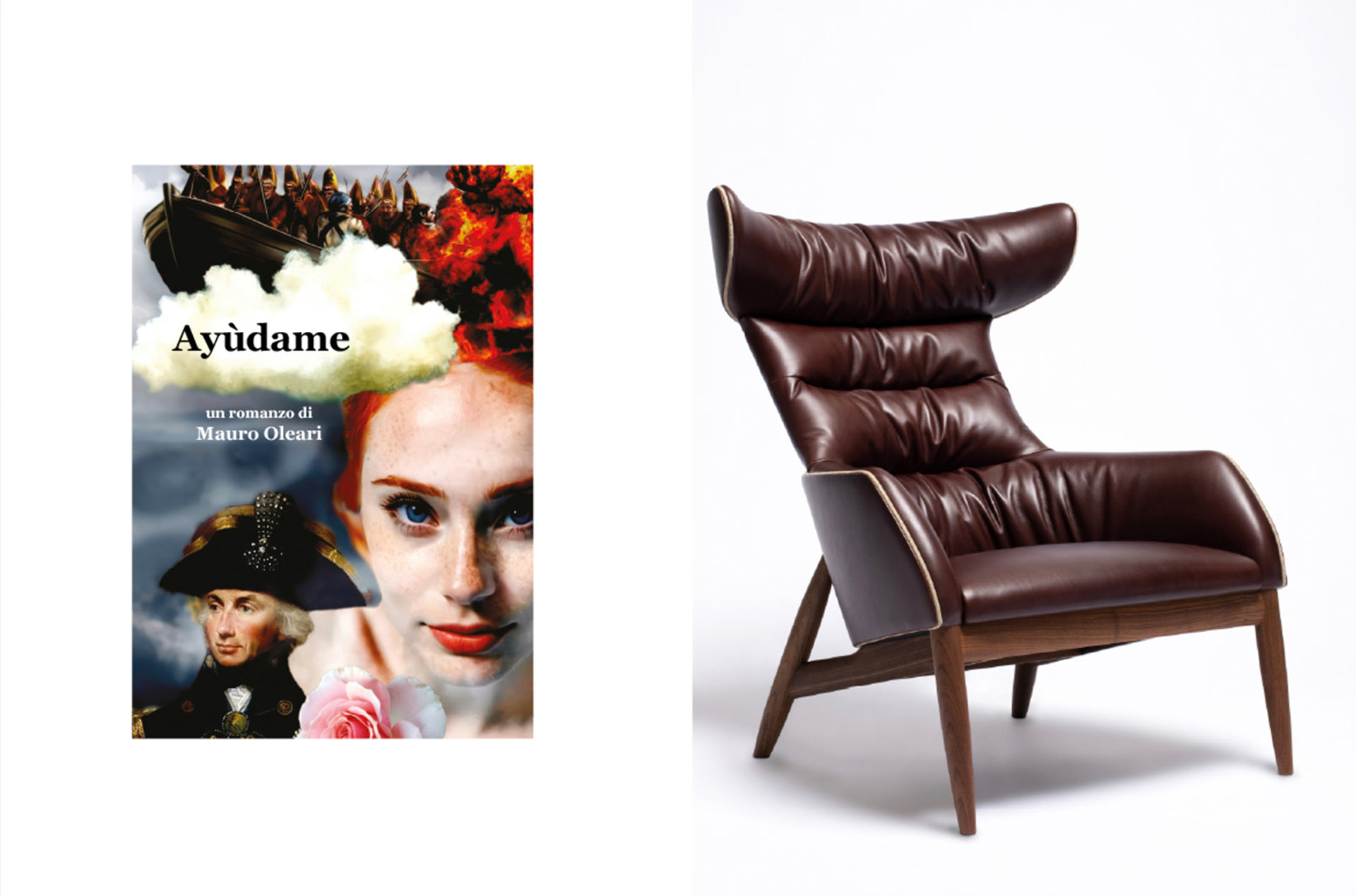
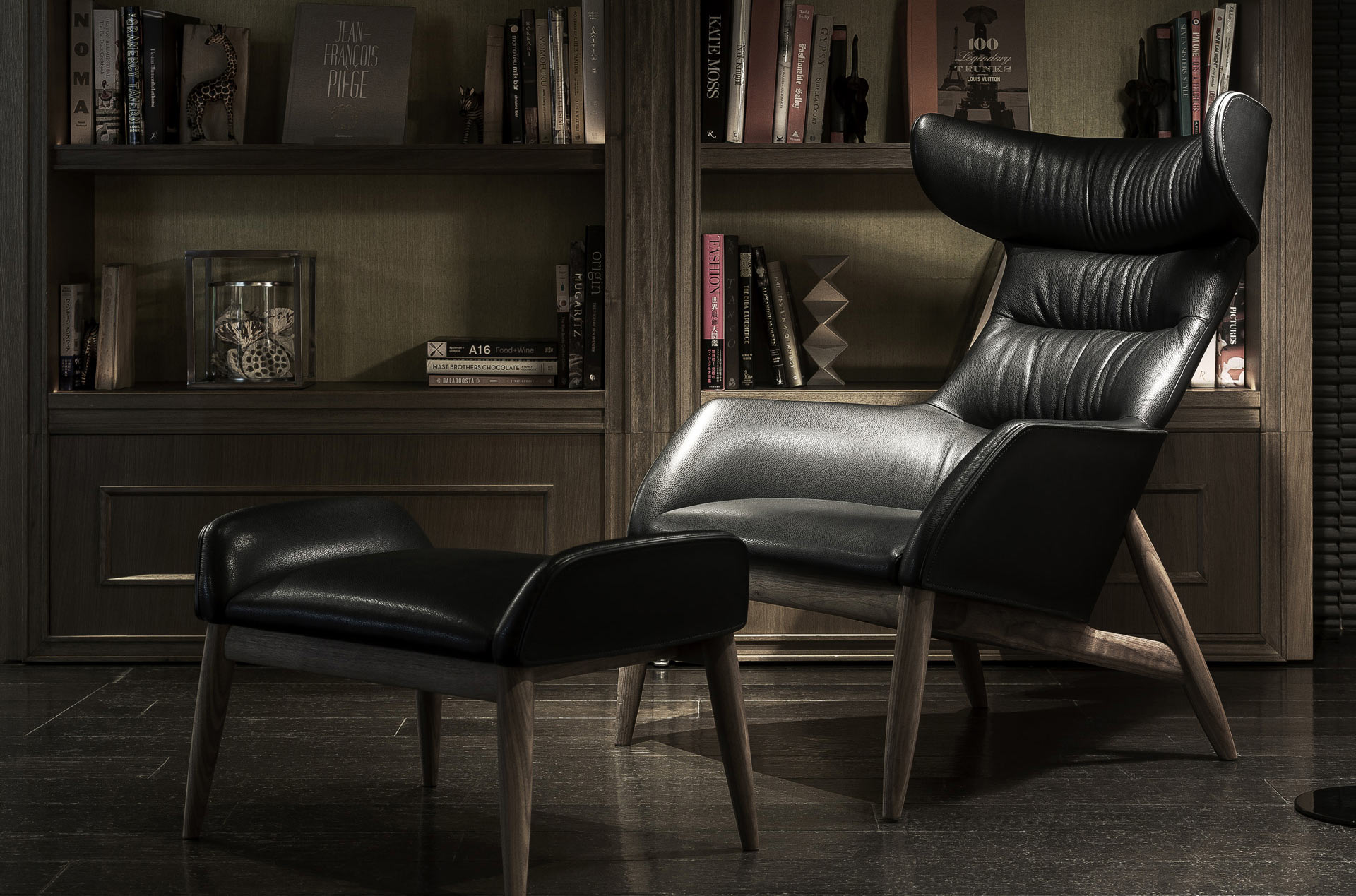
MAURO OLEARI, A WRITER AND PROFOUND CONNOISSEUR OF DESIGN, WEAVES LITERARY SENSIBILITY AND ATTENTION TO THE AESTHETICS OF OBJECTS INTO HIS WORK. IN HIS LATEST NOVEL "AYÚDAME," HE INSERTS, IN ONE SCENE, THE BEATRIX HIGH BACK EASY CHAIR BY RITZWELL DESIGNED BY SHINSAKU MIYAMOTO: A DETAIL THAT IMMEDIATELY INTRIGUED US. WE WANTED TO DELVE DEEPER INTO THIS CHOICE AND ASK WHAT THE POINTS OF CONNECTION ARE WITH THE JAPANESE BRAND.
“A well-made piece of furniture, like a well-written sentence, stands the test of time. Ritzwell proves this: every piece is designed to accompany people’s lives, evolving with them, just like a novel that continues to speak to us even after many years.”_Mauro Oleari
How did your encounter with Ritzwell come about? When did it happen?
Someone who has worked in design like me for more than forty years is, by nature, curious and sensitive. I love not only drawing, but also the quality of craftsmanship, the philosophy behind a project, the coherence between the product and the culture of its creator. A friend who is a sales representative introduced me to Ritzwell, certain that I would appreciate its qualities. I was immediately struck by its poetic yet rigorous approach, and I couldn’t resist: I ordered a RIVAGE EASY CHAIR in walnut and dark brown leather. The BEATRIX HIGH BACK EASY CHAIR arrived a few years later, but that first encounter with the brand made me understand how Japanese design can speak a universal language of harmony and timeless beauty.
What led you to collaborate with Ritzwell and start working together?
Precisely that underlying approach: the pursuit of perfection through simplicity, sensitivity toward natural materials, respect for time and for the work of hands. Ritzwell does not follow trends, but works on continuity and essence—values I feel very close to in my own way of writing and designing. Their philosophy, based on listening, balance, and authenticity, aligns with my idea of design as a cultural expression, not as a consumer product.
Can you briefly tell us the story of your showroom in Modena and your role as a retailer of the brand?
I attended the Venturi Art Institute in Modena, Architecture section, and I grew up in the workshop alongside my father, a cabinetmaker and interior designer. From him I learned to recognize woods by their scent and grain, and to respect their material nature. In 1995 I opened my own showroom of high- and mid-range quality, focusing on brands that combined innovation and craftsmanship. Ritzwell, among the high-end brands I have worked with, arrived naturally along this path: its way of conceiving furniture as a “silent inhabitant,” one that enters the home with grace and warmth, fully reflects my vision of interior design.
How do you manage to reconcile your two sides, that of entrepreneur and that of writer?
Writing and designing are two similar creative acts: both require balance, rhythm, and dialogue between form and content. In design you listen to the space and the client; in writing you build the relationship between characters and narrative time. A book like “Ayudame” is born from solitary creativity and personal pleasure, while designing a space involves engaging the user and responding to their needs. In both processes, imagination and expertise intertwine. Every project or story starts from an initial inspiration, to which elements are added: furniture or accessories in space, emotions and feelings in the story. Working with brands like Ritzwell, which focus on harmony and emotion, teaches that every creation must convey human warmth and authenticity, guided by sensitivity to detail and by deeper values.
In your opinion, what do writing and design have in common?
Both arise from a need to communicate and to leave a trace. In design, as in literature, form matters, but so do rhythm and sincerity. A well-made piece of furniture, like a well-written sentence, stands the test of time. Ritzwell proves this: every piece is designed to accompany people’s lives, evolving with them, just like a novel that continues to speak to us even after many years.
How did the choice to include the BEATRIX HIGH BACK EASY CHAIR in “Ayudame” come about? And what symbolic meaning does it have for the protagonist?
I chose the BEATRIX HIGH BACK EASY CHAIR because it represents the perfect balance between comfort, proportions, and attention to detail. Its beauty is calm and meditative, almost like a haiku. For the protagonist it becomes a refuge, a way to show his sensitivity and the peace that comes from contact with an authentic piece. An object described with care allows the reader to see and feel: design, like literature, is an emotional language. This is the same way Ritzwell conceives its furniture—not as decorative elements, but as instruments of relationship and intimacy.
What does Ritzwell represent for you today? How do you see Ritzwell’s evolution in the future?
For me, Ritzwell is a certainty: a serious and consistent brand, recognizable in its respect for materials and attention to detail. It represents a meeting point between my love for design and the search for authenticity, a way of living and inhabiting as a sensory and spiritual experience. Ritzwell grows while remaining true to itself, building bridges between East and West, between philosophy and contemporary design. Its strength lies in evolving without losing touch with nature, tradition, and the human dimension of work. For the future, I hope it will expand its distribution: the world needs to know this idea of design as culture, not just as aesthetics.
What is the genesis of “Ayùdame”? Was there an event or an idea that inspired the story?
The novel blends history and fantasy, with episodes set between 1805 and 2016, in old London, Martinique, and Spain—specifically in Los Caños de Meca, the headland facing the historic Battle of Trafalgar. It is a novel: not a true story, but a plausible narrative capable of engaging readers without too much effort or complication. If one lets oneself be carried away by the fantastic plot, each episode can be enjoyed with the same freedom with which, as children, we laughed at the antics of Herbie the Love Bug or at the flying bed in Bedknobs and Broomsticks. For those who wish to return, for a moment, to childhood, this book is ideal: fast, simple, fluid, and culturally appropriate. The work crosses various genres: from the sentimental, with the love stories between Robert and Sandy and between Gisella and Captain Smith; to the social, with the abandonment of Rebecca, known as Lulù, by her stepmother and her dramatic choice to enter a brothel in order to survive; to the military, with Jacob’s fears and Johnny’s bravado, under the vigilant and competent gaze of Horatio Nelson. It revisits universal themes such as the stepmother’s envy and narcissism toward Lulù, the gratuitous cruelty of Sinverguenza, but also Fernando’s remorse and the tragic suicide of Patricio. All of this is enriched by the artistic touch of master William Turner and his most famous paintings. History merges with storytelling, embellished by Robert’s altruism and the sincere friendship among well-defined characters, different yet united like brothers in making shared decisions. Against a backdrop where settings are described with precise and meticulous detail—like the BEATRIX HIGH BACK EASY CHAIR by Ritzwell and the Chippendale sideboard aboard Admiral Nelson’s HMS Victory. Ultimately, Ritzwell too celebrates the beauty of time, furubi, that patina objects acquire by living alongside us. Perhaps, without realizing it, this theme also entered my writing.
Would you like to leave a message for Ritzwell or for those discovering the brand through your work?
I would say: look at craftsmanship with new eyes. Behind every Ritzwell piece of furniture there are hands, time, and heart. Appreciating this culture of making means entering a world where design is not just function or beauty, but a form of harmony. It is the same message that, in my own small way, I try to convey through my stories: the value of authentic things, which grow with us and accompany us over time.
Photo Credits by Davide Docinto


